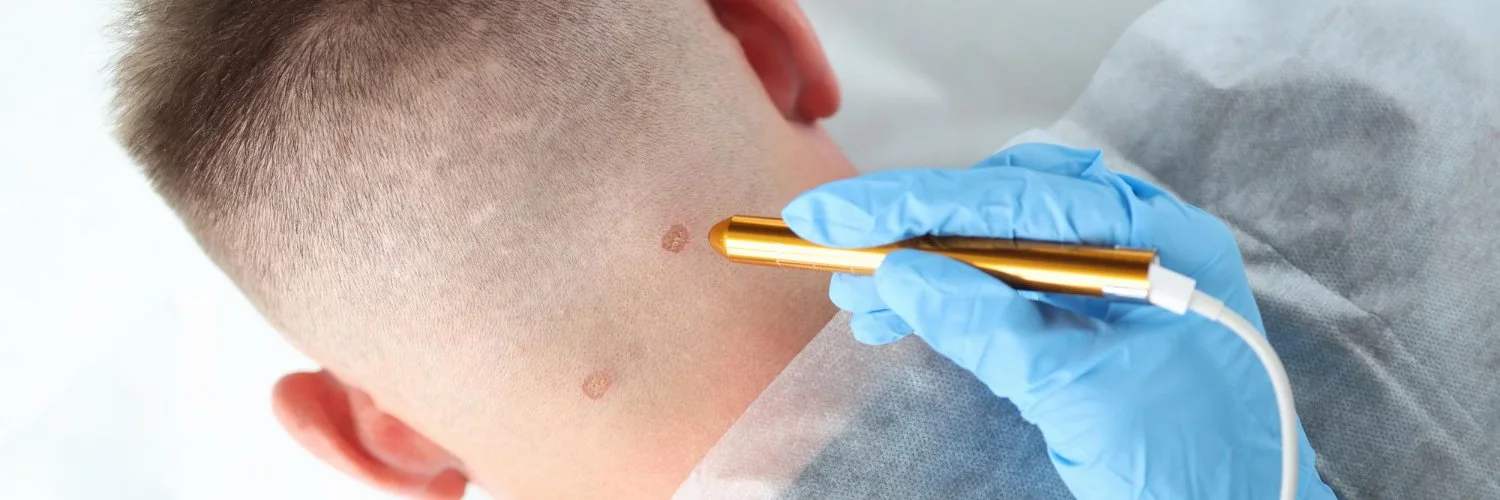
Cryotherapy (Skin Tag, Blemish & Mole Removal)
At a Glance
Treatment time: 15–20 minutes
Anaesthesia: Usually none
Sensation: Intense cold, brief sting
Downtime: Small blister/crust may form; typically heals in 7–14 days
Best for: Skin tags, common warts, seborrhoeic keratoses, cherry angiomas (after assessment)
Sessions: Often 1–2 treatments spaced 2–4 weeks apart
What is cryotherapy?
Cryotherapy uses a focused jet of extremely cold gas to freeze and destroy superficial benign lesions with high precision, minimising damage to surrounding skin.
We treat benign lesions only. We do not treat genital lesions.
Suspicious moles or changing lesions require GP/dermatology referral. We can arrange mole mapping and assessment on site.
Aftercare
1. Following treatment, residual stinging, redness & slight swelling is normal.
It is perfectly normal to experience these side effects, which can last for hours.
2. The area needs to be kept as dry as possible while healing.
For the first 3 days, it is recommended to be careful whilst showering and washing the treated area, avoid swimming, saunas, steam rooms, sunbeds and excessive exercise causing sweating. After 3 days you can gently go back to your normal activities.
3. Use a plaster to protect high bacterial areas during the day.
If the area treated is high-bacterial areas (like the underarms or groin) your practitioner may advise wearing a plaster during the day, and to remove it in the evening and reapplying a fresh plaster at night to allow the skin to breathe.
4. It is normal for the lesion to turn darker or form a scab/crust.
In the case of all treatments, over the next few days the area will turn darker and develop a crust on the surface. DO NOT pick this off! When it naturally falls away (usually in just a few days) a shiny pink/brown colour. This is not scarring, it will re-pigment over the following weeks and could take several months. There may be a slight difference in colour permanently.
5. Permanent alopecia/hair loss can occur in a treated area which was previously covered with hair.
6. If the area treated does not heal after 6 weeks, please contact your treatment provider.
7. Avoid picking at the treated area.
Do not pick at the treated area at any time after treatment, otherwise the area will take longer to heal. If a scab comes off accidentally, it will also take longer to heal, but you should still have the same outcome of a successful treatment.
8. If the scab comes off too early, check if the skin isn't open.
If it is open, this is an open wound and must be cared for to prevent infection. Put a plaster over the area to protect it and if the area becomes inflamed and produces pus, then it is infected. Use an antiseptic lotion and see your GP.
9. Wait until the scab has healed and comes off naturally before booking another session.
If the scab has not fallen off after four weeks, please wait until it has done so before booking another session. Skin can sometimes take several weeks and even months to regenerate.
10. Do not use or apply any products unless advised or prescribed by your treatment provider.
We do not recommend covering the area with any creams or plasters unless we have advised you to do so. This applies to using any anti-septic creams unless there is the suspicion of an infection.
11. If the area being treated is tanned, please note that healed skin will be lighter.
Any pigmented areas post-procedure will eventually re-pigment as it matures.
12. Protect the treated area and your skin with SPF.
Once the scab has fallen off, please use a sunblock with SPF50 on any pigmentation removal until it has re-pigmented.
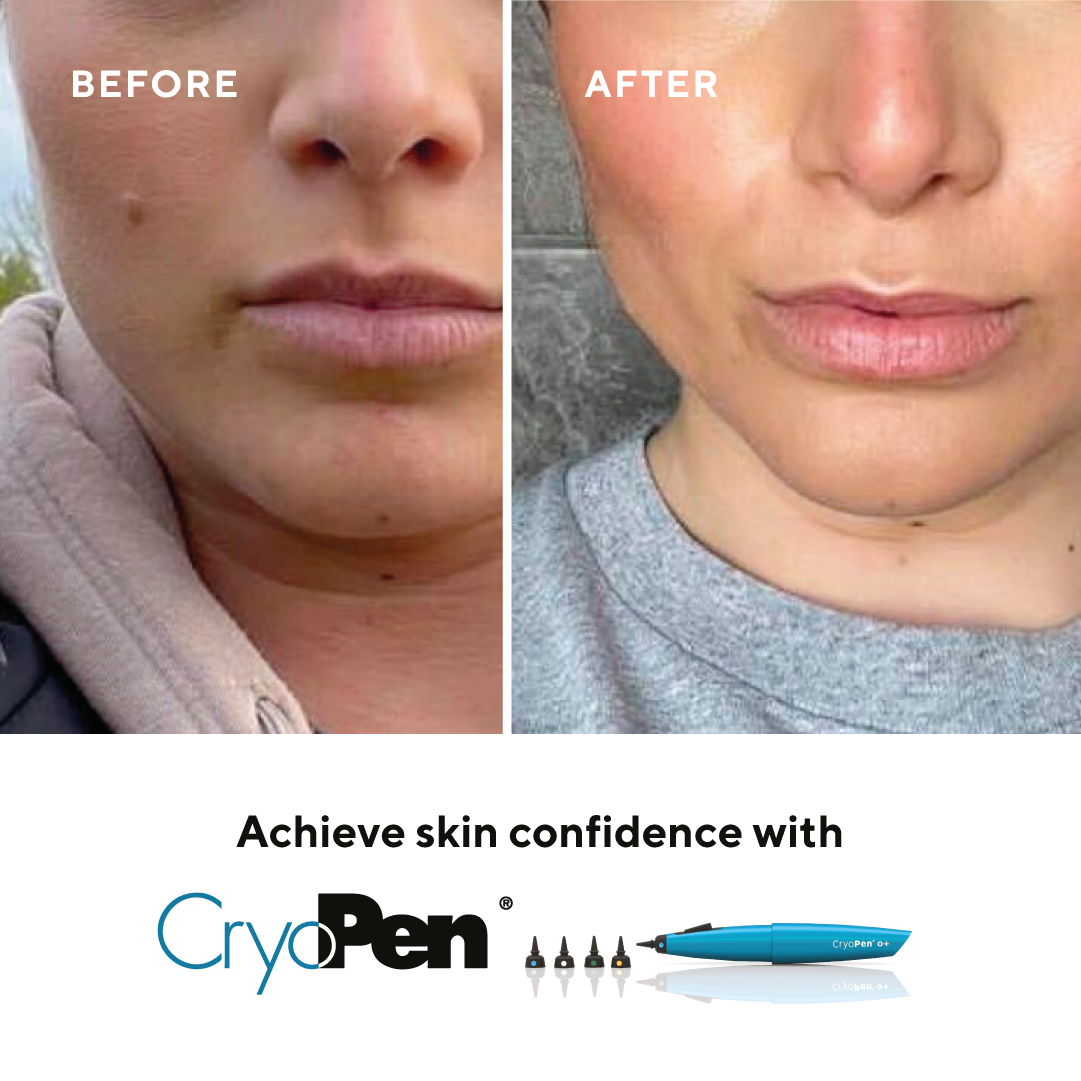
Results
Frequently Asked Questions
-
Low risk when aftercare is followed; individual healing varies.
-
Common warts respond well; stubborn plantar warts may need multiple sessions or GP care.
-
This depends on the type of lesions. Most skin tags require one sessions wheres as other lesions such as warts and seborrheic keratosis may require multiple sessions
-
It doesn’t usually. You may feel a slight tingling and cold sensation.
-
No, those who have suspicious lesions will need assessment before hand. Also patients with poor circulation or delayed wound healing are not suitable for treatment