
PRP (Platelet‑Rich Plasma) – Face, Eyes & Scalp in New Malden
PRP Treatment
PRP, Platelet-Rich Plasma, is a regenerative treatment that uses a concentrated component of your own blood to support natural repair processes within the skin or scalp.
PRP uses platelets obtained from your own blood and can be used as part of a personalised approach to hair restoration, skin rejuvenation and regenerative care.At Aesculus Clinic, we offer PRP Treatment in New Malden following a comprehensive assessment to understand what you are trying to improve and, importantly, whether PRP is the right treatment for you.
For hair loss in particular, our approach goes beyond simply treating the scalp. Where appropriate, we consider the pattern of hair loss, medical history, nutrition, hormonal factors and relevant blood tests before developing a treatment plan.
At a Glance
Treatment: Platelet-Rich Plasma (PRP)
Best for: Selected types of hair thinning and regenerative skin treatment
Treatment areas: Scalp, face, body and selected skin concerns
Treatment time: Approximately 45–60 minutes
Downtime: Redness for 24 hours
Anaesthetic: May be used depending on the treatment area
Results: Gradual rather than immediate
Treatment course: Usually recommended as a course
Maintenance: May be recommended depending on your response and goals
Consultation: Required to determine suitability
How Does PRP Work?
When tissue is injured, platelets become activated and release signalling proteins involved in the body's healing response. PRP treatment aims to concentrate platelets and introduce them into a specific area where their biological activity may support tissue repair and regeneration. The exact effect depends on where PRP is being used and what we are trying to treat. Assessment and appropriate patient selection matter.
PRP for Hair Loss in New Malden
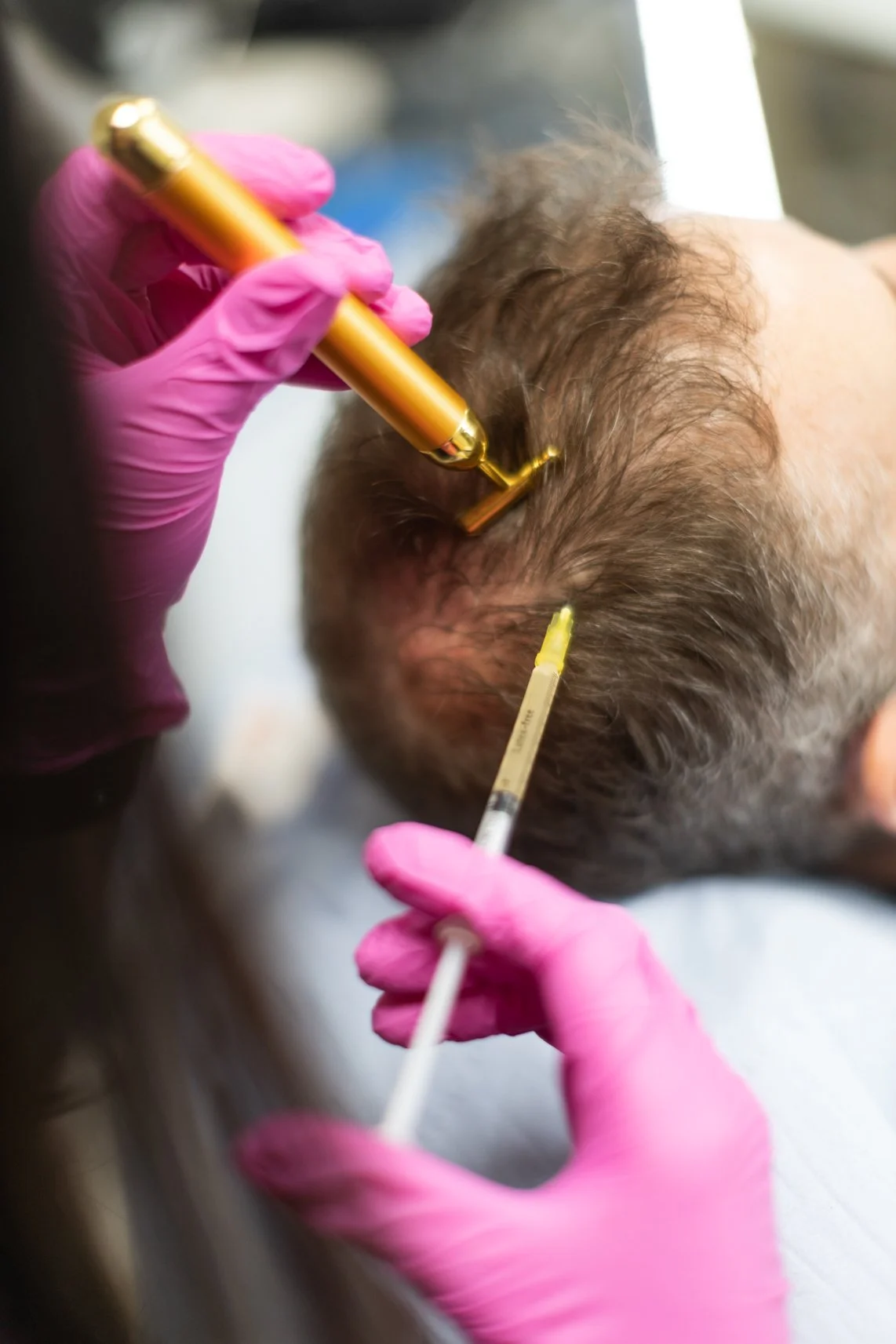
Hair loss is one of the most popular uses of PRP within aesthetic and regenerative practice. PRP can be injected into selected areas of the scalp as part of a treatment programme for certain types of hair thinning and hair loss. The aim is to support the environment surrounding existing hair follicles and potentially improve aspects of hair growth and density in appropriately selected patients. However, there is an important distinction:
PRP doesn't create completely new hair follicles. If a follicle is no longer viable, PRP cannot simply recreate it. This is why earlier assessment of progressive hair thinning can be particularly valuable.
What Types of Hair Loss Can PRP Help?
Not every type of hair loss should be treated with PRP. One of the most common conditions for which PRP is considered is androgenetic alopecia, commonly known as male or female pattern hair loss. However, increased shedding can have many different causes.
These may include:
Nutritional deficiencies
Low iron stores
Thyroid changes
Hormonal factors
Significant stress
Illness
Certain medications
Rapid weight loss
Post-pregnancy changes
Autoimmune conditions
Traction
Scalp conditions
This is why we prefer to understand why your hair is thinning before deciding how to treat it. This can be done through in-person assessment, blood testing and genetic testing. Repeatedly injecting PRP without assessing the underlying pattern or potential contributing factors may not be the most appropriate approach.
Hair Loss Is More Than a Scalp Problem
Hair can sometimes provide clues about what is happening elsewhere in the body. If you are experiencing increased shedding or changes in hair quality, your assessment may therefore include discussion around:
Nutrition
Protein intake, restrictive diets and relevant nutritional deficiencies may influence hair health.
Iron & Ferritin
Iron status may be relevant in some people experiencing increased hair shedding.
Thyroid Function
Changes in thyroid function can sometimes contribute to changes in hair growth or shedding.
Vitamin Status
Vitamin D, vitamin B12, folate and other markers may be considered where appropriate.
Hormonal Health
Hormonal changes may contribute to certain patterns of hair loss.
Stress & Lifestyle
Significant physical or emotional stress can influence the hair-growth cycle.
Where indicated, we may therefore recommend blood testing alongside your scalp and hair assessment. The aim is to treat the person, rather than simply injecting the area where hair is being lost.
PRP vs Exosomes for Hair Loss
Both PRP and exosome-based treatments are discussed within regenerative hair restoration, but they aren't the same thing.
PRP is prepared from your own blood and contains concentrated platelets and associated signalling factors.
Exosome treatments use externally produced preparations containing extracellular vesicles and associated biological components, with formulations varying considerably between products.
Which approach is appropriate depends on your individual hair loss, treatment goals and the products being considered.
At Aesculus Clinic, we don't believe the newest treatment is automatically the best treatment.
The starting point remains: What is causing your hair loss, and what does your scalp actually need?
PRP for Skin Rejuvenation
PRP can also be used as part of a regenerative approach to skin quality. Rather than creating volume in the way a dermal filler does, PRP aims to utilise your own platelet-derived biological factors to support the skin's natural repair processes. It may be considered where the goal is to improve aspects of:
Skin quality
Texture
Fine lines
Dull or tired-looking skin
Overall skin rejuvenation
Results are typically gradual and subtle, making PRP more appropriate for patients interested in progressive skin improvement rather than immediate structural change.
PRP for Skin Rejuvenation
PRP can also be used as part of a regenerative approach to skin quality. Rather than creating volume in the way a dermal filler does, PRP aims to utilise your own platelet-derived biological factors to support the skin's natural repair processes. It may be considered where the goal is to improve aspects of:
Skin quality
Texture
Fine lines
Dull or tired-looking skin
Overall skin rejuvenation
Results are typically gradual and subtle, making PRP more appropriate for patients interested in progressive skin improvement rather than immediate structural change. PRP may also be incorporated into a treatment programme involving microneedling. It can also be used with polynucleotides and skin boosters
Potential Benefits of PRP Treatment
Depending on why PRP is being used, potential benefits may include:
Uses a preparation obtained from your own blood
Regenerative rather than volumising approach
Can form part of a hair-restoration programme
May support selected cases of hair thinning
Can be used for skin rejuvenation
May support skin quality and texture
Can be combined with microneedling where appropriate
Gradual, natural-looking improvement
Minimal downtime for many patients
Can form part of a wider healthy-ageing programme
What Is PRP?
PRP stands for Platelet-Rich Plasma. Your blood contains several components, including red blood cells, white blood cells, plasma and platelets.
Platelets are perhaps best known for their role in blood clotting, but they also contain proteins and signalling molecules involved in the body's natural repair processes. During PRP treatment, a small amount of your own blood is collected and processed using a centrifuge to separate and concentrate the platelet-containing plasma. The resulting PRP is then administered into the treatment area. Because the treatment is prepared from your own blood, PRP has become an established part of the wider field of regenerative treatments.
Frequently Asked Questions
-
PRP may support improvements in hair growth and density in some appropriately selected patients, but it cannot guarantee regrowth and doesn't create completely new follicles where follicles are no longer viable.
-
PRP hair treatment is usually performed as a course, followed by maintenance where appropriate. Your recommended protocol will depend on your hair-loss pattern and response.
-
Hair grows slowly, so changes take time. Progress is generally assessed over a period of months rather than days or weeks.
-
Not everyone requires blood testing. However, where your history or symptoms suggest a possible nutritional, thyroid, hormonal or other contributing factor, appropriate investigations may be useful.
-
This depends on whether viable follicles remain and the underlying cause and stage of hair loss. A scalp and hair assessment is required before predicting whether PRP is likely to be worthwhile.
-
"Vampire facial" is an informal marketing term commonly associated with facial treatments using PRP, often with microneedling. We prefer the more accurate term PRP skin treatment.
Regenerative treatment should start by understanding what we are trying to regenerate and why.
At Aesculus Clinic, PRP in New Malden uses platelet-rich plasma prepared from your own blood as part of a personalised approach to hair restoration, skin rejuvenation and healthy ageing.
Whether you are concerned about thinning hair, increased shedding or declining skin quality, we begin with an assessment rather than simply recommending a procedure.
Our aim is to understand the underlying concern, determine whether PRP is appropriate and create a treatment plan focused on gradual, natural-looking improvement.
Frequently Asked Questions
-
Most notice changes from 12 weeks with a course.
-
It’s autologous (your own), but not suitable if you have certain blood disorders—assessed at consultation.